Perhaps I’m not the best person to ask.
I often get asked for advice on how to get into athletics journalism, and I always feel slightly fraudulent answering. I don’t have a journalism degree. I didn’t study sports media. In fact, I don’t have any formal writing or English qualification beyond a GCSE.
And these days, strictly speaking, I’m not a journalist. I work editorially for World Athletics, which is a governing body rather than an independent media outlet. Those are different things, and I think the distinction matters.
But I started my career in journalism at Athletics Weekly, have spent more than 20 years writing, reporting and editing within the sport, and many of the skills and routes into those different areas overlap.
Some people will want to work for newspapers or independent publications. Others may end up working for a federation, event organiser, broadcaster or digital platform. Those roles aren’t interchangeable, but many of the core skills are.
So perhaps the better question isn’t “how do I become an athletics journalist?”
It’s: how do I start building a career writing about athletics?
How I got here
I have vague memories of watching athletics on TV in the late 1980s and early 1990s, but my obsession with the sport really began in the summer of 1998.
I took part in a holiday athletics programme at my local club, Birchfield Harriers, properly tried the events for myself for the first time, and simultaneously became hooked on watching the sport. I also started picking up old athletics books and reading obsessively about the history and statistics of the sport.
But none of that made me think: I should become an athletics writer.
A few years later, I went to university to study graphic design. When I realised that web design wasn’t included on the course, I decided to teach myself and built an athletics website called AthleticsLinks.com.
To give it some actual content, I started interviewing athletes. There was no grand plan. I’d find an email address online, send a message and ask if they fancied doing an interview.
I also started designing websites for athletes, including Paula Radcliffe and Allyson Felix, largely through a mixture of enthusiasm and youthful bravado.
Without really intending to, I was building a portfolio. That turned out to matter.
Start before you’re “ready”
Towards the end of my degree, I saw a job advert in Athletics Weekly for a staff writer. I didn’t have a journalism qualification, but I did have an obsessive knowledge of athletics, a graphic design degree and, thanks to the interviews I’d been publishing online, some examples of my writing. I applied, then landed the job.
Because Athletics Weekly was a small team, my design background was useful too, and my role soon became a fairly even split between designing the magazine and writing for it.
That experience shaped one of the main pieces of advice I’d give anyone wanting to get into athletics journalism today:
don’t wait until somebody appoints you as a journalist before you start behaving like one.
Write a blog. Start a Substack. Cover your club. Analyse a race. Interview an athlete. Explain something about the sport that you think people misunderstand. Simply get into the habit of writing, editing and publishing.
A CV saying “I’m passionate about athletics journalism” is fine. Five genuinely good pieces of work are much more useful.
Qualifications still matter
I appreciate that my own route was unorthodox, so none of what I say here is an argument against studying journalism.
A good journalism course can teach skills I had to pick up as I went along: interviewing, reporting, media law, structuring stories, news judgement and the mechanics of producing publishable copy.
Courses also often provide something just as valuable: opportunities. They may have links with newspapers, broadcasters, governing bodies or other organisations. Placements can give you published work, experience and useful contacts.
So if a relevant qualification is right for you, pursue it. Just don’t assume you have to wait until you’ve completed one before you can start creating work.
Learn to be useful
Early-career opportunities don’t always go to the person capable of writing the most beautiful sentence. They often go to the person an editor trusts.
Can you file on time? Can you work quickly without becoming careless? Can you understand a set of results? Can you spot the real story? Can you check your facts? Can you follow a house style? Can you accept an edit without treating every deleted adjective as a personal attack? Reliability is hugely valuable.
Some of my early work was hardly glamorous. I spent many evenings and weekends compiling overseas results for Athletics Weekly. I covered age-group championships and cross-country meetings.
I still remember one of my first assignments in Bedford. I was 20 years old, staying in a Travelodge, eating a Chinese takeaway alone in my room and thinking: I’ve made it.
My standards of glamour were wonderfully low. But I was thrilled to be doing it, and the basic skills I learnt on those jobs are the same ones I still rely on now.
Know your sport – but know what matters
Having a deep knowledge of athletics helped me enormously. Understanding the sport’s history and statistics helped me recognise when something significant had happened.
Athletics has quite a lot of machinery under the bonnet: records, rankings, wind readings, qualification systems, course eligibility, all-time lists, championship formats. You don’t need to become a statistician, but you should understand the sport you’re covering.
That said, being an athletics nerd does not automatically make you a good athletics writer. Knowing everything is not the same as knowing what belongs in the article. Let’s face it: being able to recite an athlete’s past 12 season’s bests does not mean the reader needs all 12. Part of the skill is knowing what to leave out.
The best athletics journalism isn’t ultimately about times and distances. It’s about people. Knowing that somebody ran 12:46.81 is information. Knowing why it matters is journalism.
Your other skills might get you through the door
My graphic design degree looked, on paper, like an odd route into journalism. In reality, it made me more useful.
That principle applies even more now. Writing + social media; writing + data analysis; writing + video editing; writing + photography; writing + design.
You don’t need to become brilliant at everything, but having another skill can make you far more versatile.
Sometimes the thing that looks like a sideways step is the thing that gets you where you wanted to go.
Put yourself where opportunities can find you
My first assignment for World Athletics came in 2006. World Athletics approached Athletics Weekly looking for someone to write reports for them at the World U20 Championships in Beijing.
That led to more assignments. Those became more frequent. Freelance work followed. Then, in 2012, I joined World Athletics full-time.
There wasn’t one enormous career-changing moment; it was a succession of smaller ones. You do one thing well enough that somebody asks you to do another.
Someone remembers that you’re reliable. Someone needs a writer and thinks: Doesn’t Jon do that?
That’s why networking matters (although I slightly recoil at the word because it makes normal human interaction sound like a corporate speed-dating exercise).
Go to competitions. Talk to people. Introduce yourself. Send sensible pitches. Make it clear what you can do.
You don’t need to force yourself into every conversation. You just need people to know you exist.
Prepare properly
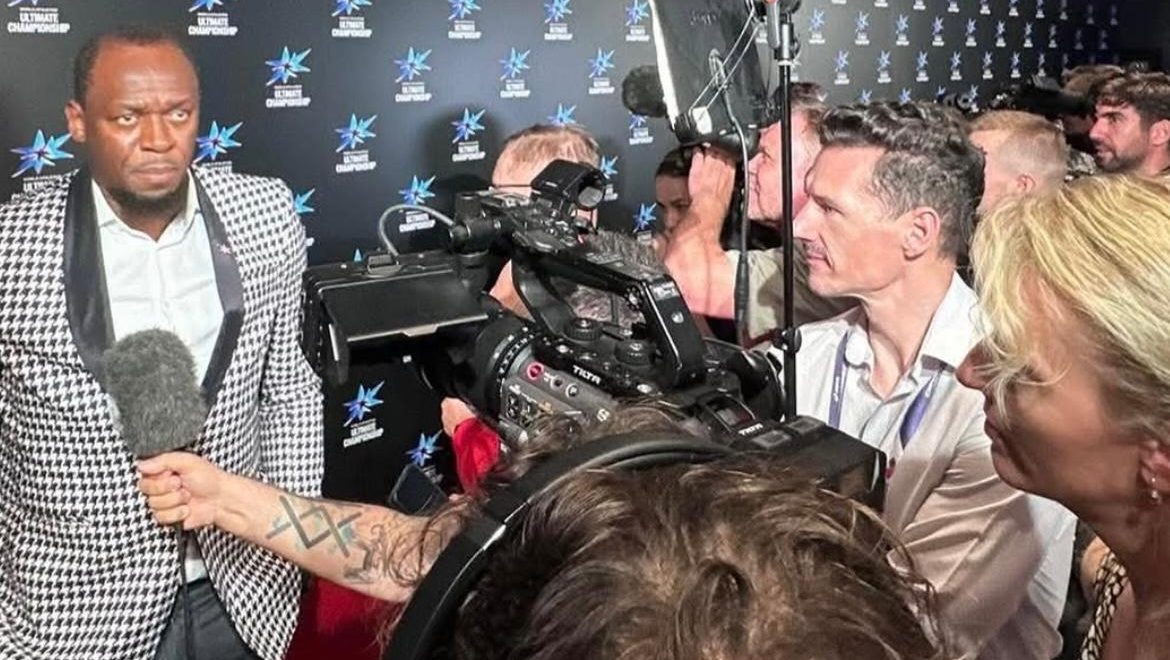
Interviewing was probably the part of the job I found least natural at first. I’d get nervous, particularly interviewing people face to face, and I didn’t always trust myself to come up with good questions on the spot.
So I prepared. A lot. I’d go into interviews with far more questions than I could possibly need. It’s something I still do today.
There’s no prize for turning up underprepared because you want the conversation to feel spontaneous. The better prepared you are, the easier it becomes to listen properly and react to what the person is actually telling you.
And quite often, the best question will be one you hadn’t written down at all.
Pitch an idea, not yourself
If you want to write for an outlet, give the editor something they can react to.
Not: “Hi, I’d love to write about athletics. Please let me know if you have any opportunities.” That requires the editor to invent some work for you.
A much better proposition is: “I’d like to write a piece about X. The hook is Y, I’d speak to Z, and it feels timely because…”
They can say yes. They can say no. They can suggest a different angle. But you’ve given them something tangible.
Oh, and don’t send a pitch that has been generated by AI. Editors can spot those a mile off.
If I were starting today
If I were 20 and trying to get into athletics journalism now, my plan of action would probably look something like this:
- I’d create a simple website or Substack.
- I’d publish a handful of strong pieces showing some range: a report, an interview, an analytical piece, perhaps something statistical.
- I’d cover local athletics whenever I could.
- I’d learn how to use results databases properly.
- I’d develop at least one adjacent skill.
- I’d read good journalism and work out why it was good.
And then I’d start pitching. I wouldn’t wait for somebody else to decide I was sufficiently qualified to begin.
Finally, do it because you enjoy it
A career writing about athletics probably isn’t the one to choose if your main ambition is to become extraordinarily rich. I have friends working in areas such as finance and law who earn considerably more than I do.
Some of those same friends look at my job – the places I travel to (not including Bedford), the competitions I attend, the people I meet and the sport I spend my working life immersed in – and tell me how lucky I am. I can’t disagree.
There are easier ways to make more money, but enjoyment and satisfaction have value too.
I ended up in this industry largely by accident: an athletics-mad graphic design student built a website, emailed some athletes and gradually discovered that the things he was doing for fun could become a career.
Your route may look completely different. Get the qualification if it’s right for you. Learn the skills. Find opportunities. Make yourself useful. Put yourself out there.
But above all, start doing the work. You don’t need to wait for someone else to tell you that you’re ready to start.
Views expressed here are my own and do not necessarily represent those of any employer.